

Context
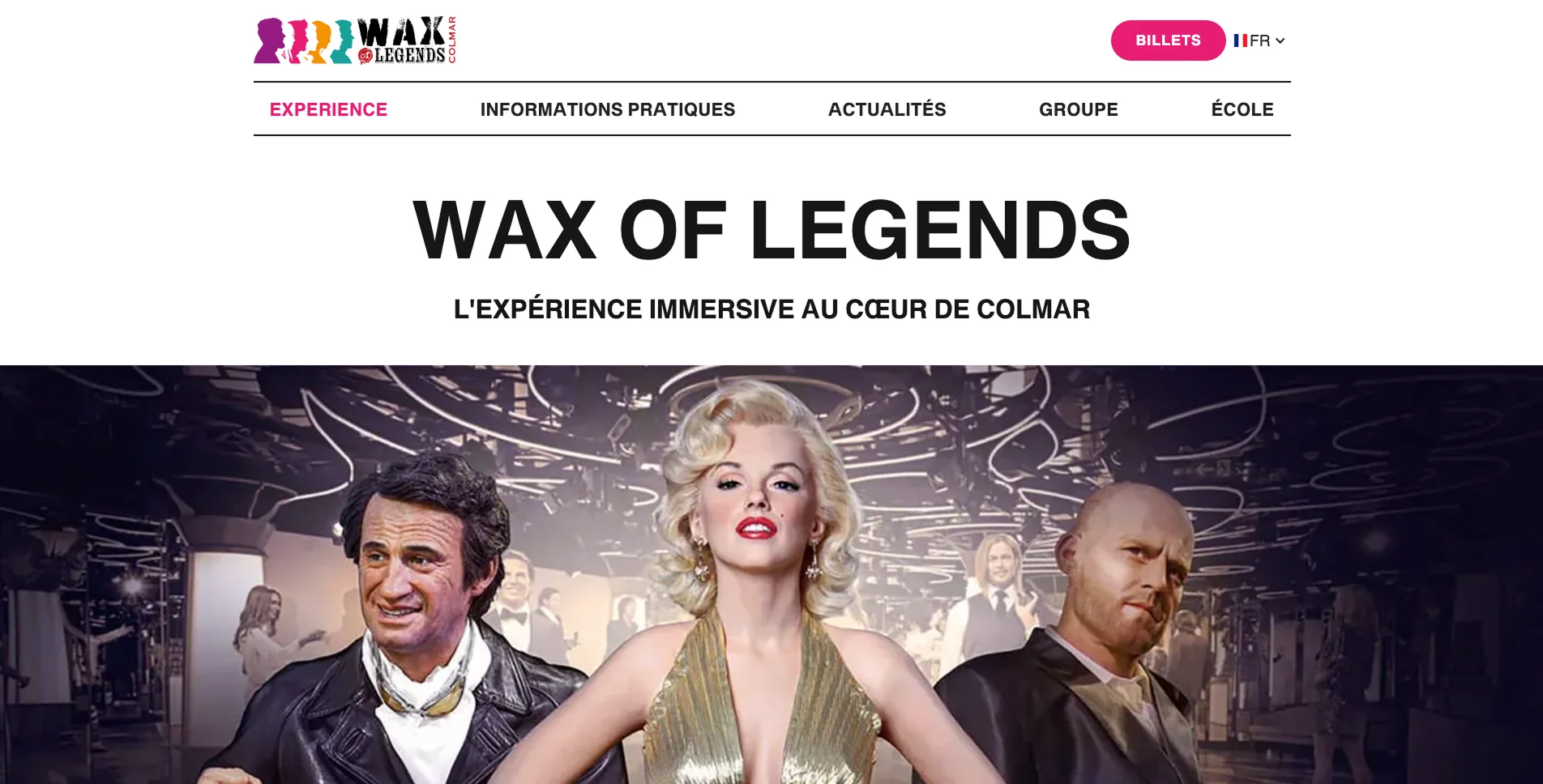
Wax of Legends is an immersive wax museum in the heart of Colmar, telling the stories of Alsatian legends through 60 wax figures and 30 interactive audio points. It belongs to the Fascineum group, an operator of experience museums across Europe.
The museum needed a brand-new website that could do two jobs at once: sell tickets to an international audience arriving in four languages, and stand out in a search landscape that no longer stops at Google. Increasingly, visitors ask an AI assistant "what should I see in Colmar?", and the museum needed to be part of that answer from day one.
The challenge
A modern attraction website has to be found in two very different places at once.
Traditional search still matters: the site had to be technically clean, multilingual, fast and structured so Google could index and rank it correctly across French, English, German and Italian. But a second, newer channel was becoming just as important: generative search. When someone asks ChatGPT or Perplexity for things to do in Colmar, the assistant only recommends sources it can crawl, parse and trust. Most museum sites are invisible to that layer, with no open crawler access, no declared entity, and no structured data for an AI to quote.
The brief, in short: launch a showcase site that converts multilingual visitors into ticket buyers, and make it one of the first attractions an AI engine can confidently cite about Colmar.
Objectives
- Convert across four languages: a clear booking path from homepage to tickets, consistent in FR, EN, DE and IT.
- Be technically flawless for Google: correct hreflang, canonicals, sitemap hygiene and rich-result eligibility.
- Be readable by AI engines (GEO): open crawler access plus a complete, machine-readable declaration of what the museum is.
- Fuel ongoing SEO: a blog the museum can update itself to keep earning visibility over time.
- Ship a reusable foundation: an industrialised Webflow build the group can adapt to its other museum properties.
Our approach, step by step
1. A conversion-first Webflow build
We built the site in Webflow around a hub-and-spoke structure: the homepage and key pages funnel toward the tickets and practical-info pages, with well-distributed "Book my tickets" and "Discover" calls to action. The content hierarchy (Discover, Legends, Celebrities, Tickets, Practical info) maps to how a visitor actually plans a trip.
2. A clean multilingual foundation
Four languages (FR, EN, DE, IT) with hreflang tags, plus an x-default fallback so Google always has a version to serve when it cannot detect the visitor's language. Image alt text was written in English for the widest possible SEO reach across German, Italian and English speakers.
3. Technical SEO hygiene
We shipped a custom sitemap that excludes transactional pages (checkout, payment, order confirmation, search) so crawl budget stays on the pages that matter, tightened canonicals, and made sure the indexable content told a consistent story.
4. A full structured-data entity graph (the biggest lever)
This is what makes a site quotable. We implemented JSON-LD so that both Google and AI engines get an explicit, machine-readable declaration of the museum: TouristAttraction and Museum as the core entity, LocalBusiness for the name-address-phone data, FAQPage for common visitor questions, and AggregateRating for reviews. Rich results (hours, prices, FAQ) become eligible in Google, and AI engines get a clear entity they can cite with confidence.
5. Opening the door to AI agents (GEO)
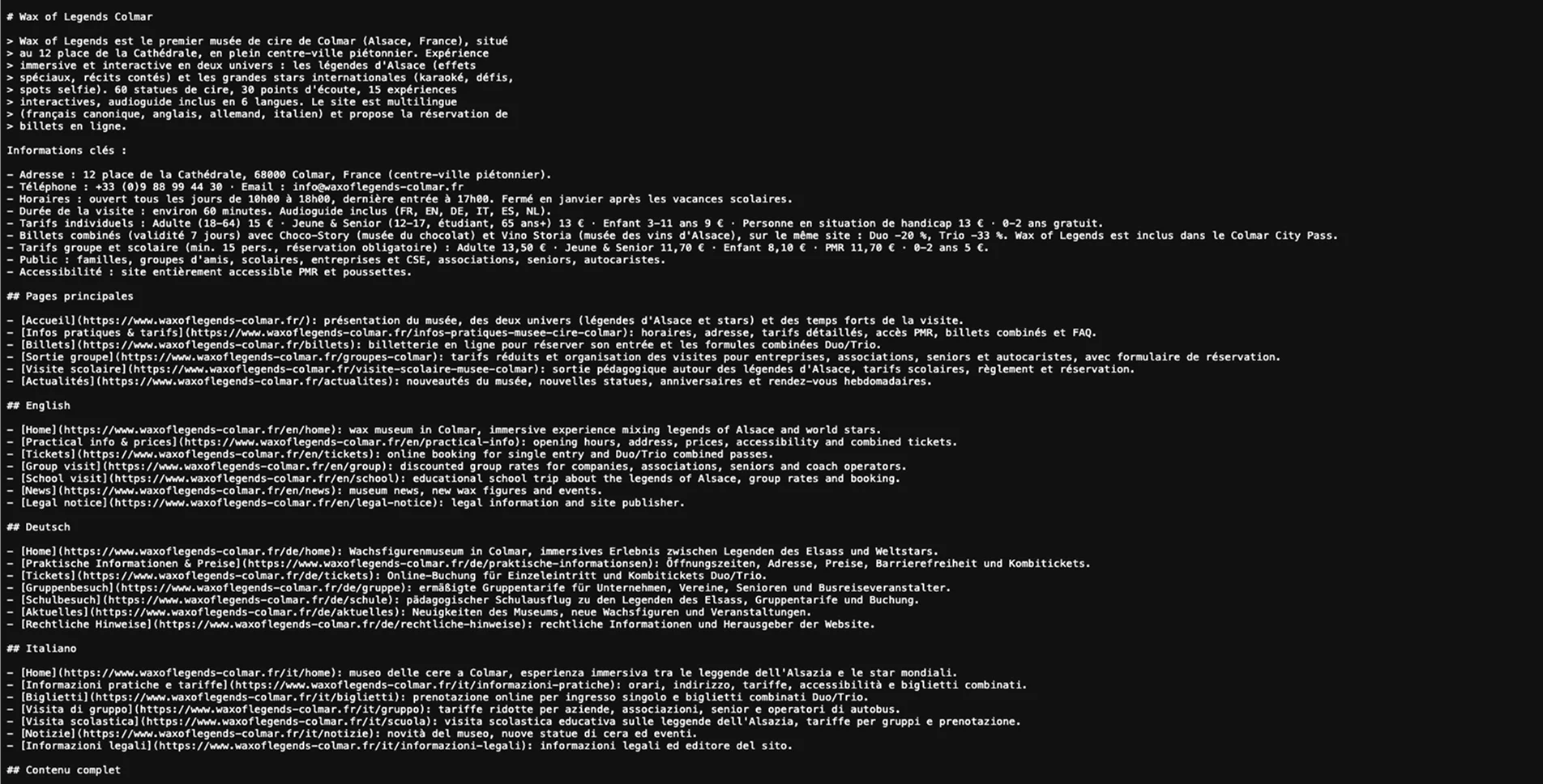
We configured robots.txt to explicitly allow the agentic crawlers: GPTBot, ClaudeBot, PerplexityBot and others. This is the prerequisite for generative engine optimisation, since an AI can only recommend a museum it is allowed to read. Combined with the structured data above, the site is genuinely citable. As a forward-looking bonus, we added an llms.txt file, a plain-language description of the site for AI agents, positioning the museum one standard ahead.
6. A blog engine for long-tail SEO
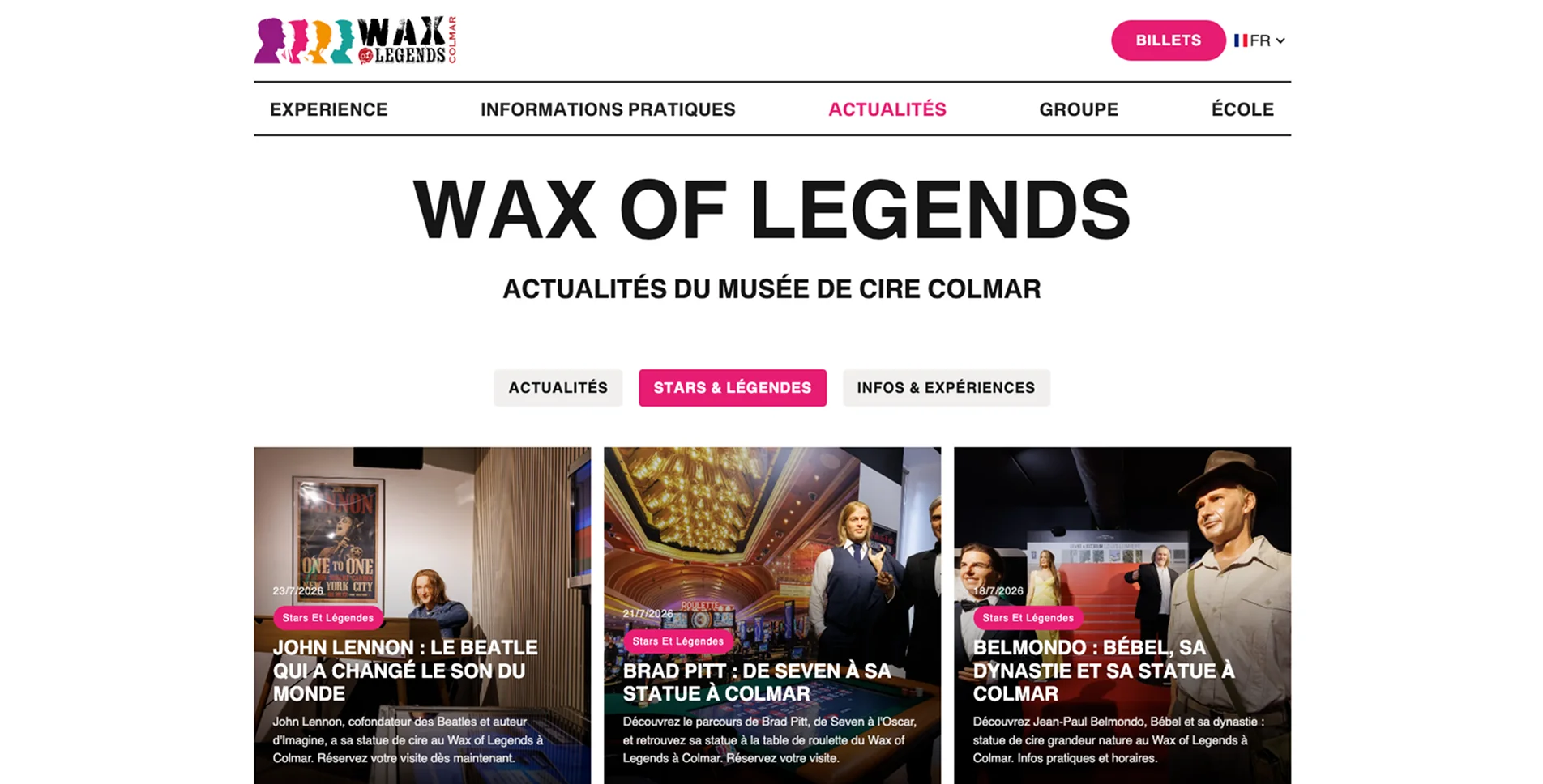
A showcase site ranks for its core pages; a blog is what keeps it growing. We built a blog in the Webflow CMS so the museum's team can publish news, events and Alsatian stories on their own, without a developer. Each article targets the long-tail queries visitors actually type and ask AI assistants, adds fresh, regularly updated content that Google and AI engines reward, and carries author and role fields to reinforce authority (E-E-A-T) signals. The blog turns the site from a fixed brochure into a channel that earns visibility month after month.
Results
We closed every critical gap identified in the SEO/GEO audit. The site is live, multilingual and commercially functional, with:
- a complete structured-data entity graph, from a starting point of none;
- open, explicit access for AI search agents, backed by an llms.txt standard;
- a clean multilingual and sitemap architecture aligned with Google's guidelines;
- a self-service blog that lets the museum keep publishing SEO content on its own;
- a conversion-oriented booking path consistent across all four languages.
Because the build was industrialised, the same foundation is now being adapted to other properties in the group, turning one museum website into a repeatable model.
Frequently asked questions
What did JAK Solutions build for Wax of Legends?
A four-language showcase website in Webflow for the Wax of Legends wax museum in Colmar, with a CMS blog, optimised for both Google search and AI search engines.
What is GEO (Generative Engine Optimisation)?
GEO is the practice of making a website understandable and citable by AI search engines like ChatGPT, Claude and Perplexity, through open crawler access, structured data and clearly declared entities.
How do you make a website visible to AI search engines?
By allowing agentic crawlers in robots.txt (GPTBot, ClaudeBot, PerplexityBot), declaring the business as a structured-data entity in JSON-LD, and describing the site in plain language via an llms.txt file.
Why add a blog to a museum website?
A blog lets the museum publish fresh content that targets long-tail search queries, keeps the site active for Google and AI engines, and builds topical authority over time, all managed in-house through the Webflow CMS.