
Web application development
Custom web application development, validated before it is built
A shared spreadsheet three people edit at the same time, double entry between two systems that do not talk to each other, client follow-up living in an inbox. Custom web application development replaces that patchwork with a single tool built around the way you work. Three things determine the scale of a project: functional scope, integrations with your current tools, and the number of user roles to manage. At JAK Solutions, an agency based in Anderlecht, most projects start with a 14 day validation sprint, to check that the product answers a real need before committing to full development.
When does custom software cost less than a subscription?
Custom development makes sense when no market tool properly covers your process, and when the cumulative cost of subscriptions ends up exceeding the initial investment. A generic subscription is billed per month and per user: for a team of fifteen, the expense becomes structural and grows with headcount, without the tool adapting any further to you. These four situations tip the balance.
A process that sets you apart
Accounting and payroll are better served by standard, certified software. The process that makes you specific, the one no market tool covers properly, is what justifies dedicated development.
Tools that do not talk to each other
When your data lives between a CRM, a spreadsheet and an invoicing tool, double entry becomes the norm and errors follow. A custom application centralizes and connects to what already exists rather than replacing everything.
A cost that grows with your team
Subscriptions are billed per user. The bigger your team, the higher the bill, with no functional counterpart. An application you own has no such growth cost.
A dependency that holds you back
The day the vendor changes its pricing, removes a feature or shuts down, you have neither recourse nor data. A tool you own leaves you in control of its roadmap.
Custom is not always the right answer. If an existing tool covers your need, we will tell you.
Which format fits your project?
Projects fall into three families, with fairly consistent orders of magnitude on the Belgian market: a focused internal tool generally sits between 5,000 and 15,000 euros, a complete management tool between 15,000 and 50,000 euros, a platform with client accounts above 40,000 euros. These are markers to place a project, not to price it: the real figure depends on scope, integrations and the number of user roles.
Focused internal tool
A precise need: replacing a shared Excel file, automating a follow-up, centralizing a contact base. One user type, a limited scope.
It is the right format for a first step into digitalization, before investing further once the need is proven in the field.
It is the right format for a first step into digitalization, before investing further once the need is proven in the field.

Complete management tool
Several linked processes in a single application: quotes, invoicing, scheduling, client follow-up. This is the most frequent request from Belgian SMEs wanting to escape a pile of generic tools.
A regulated trade, with sector specific VAT or traceability standards, means more rules to cover than a services SME.
A regulated trade, with sector specific VAT or traceability standards, means more rules to cover than a services SME.

Platform or SaaS product
Multiple accounts, differentiated rights per profile, sometimes an architecture designed to host several client companies. This is the format of a product meant to be sold, not only used internally.
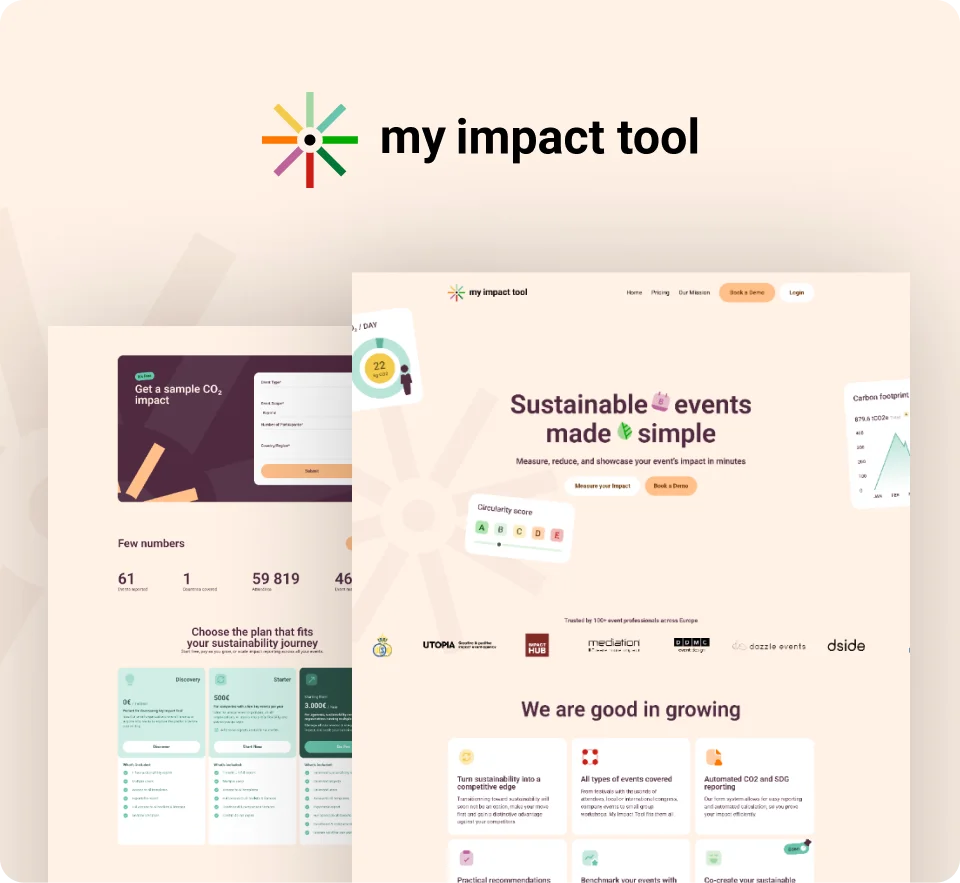
MyImpactTool followed that path: born as an internal reporting tool for an events client, it is now used in fifteen countries.
MyImpactTool followed that path: born as an internal reporting tool for an events client, it is now used in fifteen countries.

Validation sprint, 8,000 euros over 14 days
According to a CB Insights study on why startups fail, 42% of projects fail for lack of real market need, well ahead of running out of money or a weak technical team.
Before committing to full development, we test the concept with 8 to 12 real users and deliver a documented recommendation: Go, Pivot or Kill. Fixed price, any overrun absorbed by the agency.
Before committing to full development, we test the concept with 8 to 12 real users and deliver a documented recommendation: Go, Pivot or Kill. Fixed price, any overrun absorbed by the agency.

Artificial intelligence integration
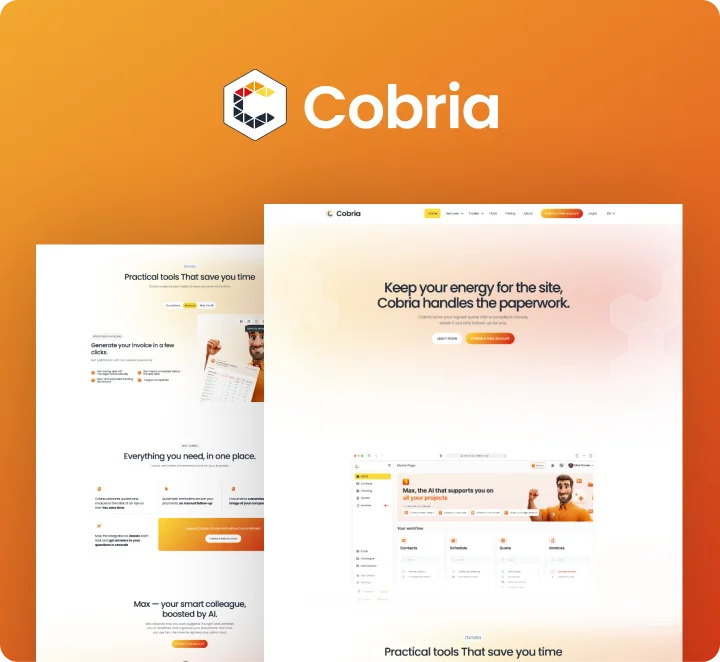
We add AI when it produces a measurable gain, not for show. On Cobria, the built in assistant writes complete quotes and saves 3 minutes per quote generated.
We also handle automated document analysis, intelligent search and decision support.
We also handle automated document analysis, intelligent search and decision support.


If your current system already runs on FileMaker, the approach is different and we detail it on our dedicated FileMaker development page.
How does a web application project actually run?
A project runs in four stages: scoping, screen design, development in testable releases, then go live and maintenance. Gaps between two quotes for an identical project almost always come from a poorly defined scope at the start, not from a difference in skill between providers.
- 01
Scoping - We separate what must exist at launch from what can wait for version 2. This stage determines the budget.
- 02
Journeys and interface - We design the screens before writing a line of code. An interface your teams do not adopt makes the development useless.
- 03
Development in releases - You see the application working before it is finished. Each stage is testable, which lets you correct a direction while it still costs little.
- 04
Go live and beyond - Migration of existing data, team training, then maintenance. We price the upkeep from the start.
What results have our clients obtained?

Gains measured on projects delivered and still in service, not generic promises.
Two measured examples
Cobria is the application we built for construction professionals: quotes, invoicing, scheduling and site follow-up in a single interface, with an AI assistant that writes the quotes. Measured result: 3 minutes saved per quote generated. MyImpactTool started as an internal impact reporting tool for an events client, then grew with us into a SaaS product now used in fifteen countries.
 No more double entry between your tools
- Centralized, up to date data for the whole team
- Admin time recovered for work that matters
- A tool you own, with no per user cost
- A technical base that accepts your changes instead of blocking them


Freelance or agency to build your application in Belgium?
The difference is not only the day rate. If the independent developer who built your application is no longer available, picking up code you do not know often costs more than starting over, especially when the technical documentation has not been kept up to date. We put several developers on each project, precisely to avoid that dependency on one person.
Our teams are in Anderlecht and we work in French, Dutch or English. Brussels SMEs can also draw on the regional digitalization grant, which covers up to 70% of an internal process digitalization project, provided the application is filed before any spending is committed.
Our teams are in Anderlecht and we work in French, Dutch or English. Brussels SMEs can also draw on the regional digitalization grant, which covers up to 70% of an internal process digitalization project, provided the application is filed before any spending is committed.

Technical stack: React and Node.js on the application side, .NET Core for enterprise architectures, PostgreSQL, cloud hosting.
Our projects
Applications in service, not mockups
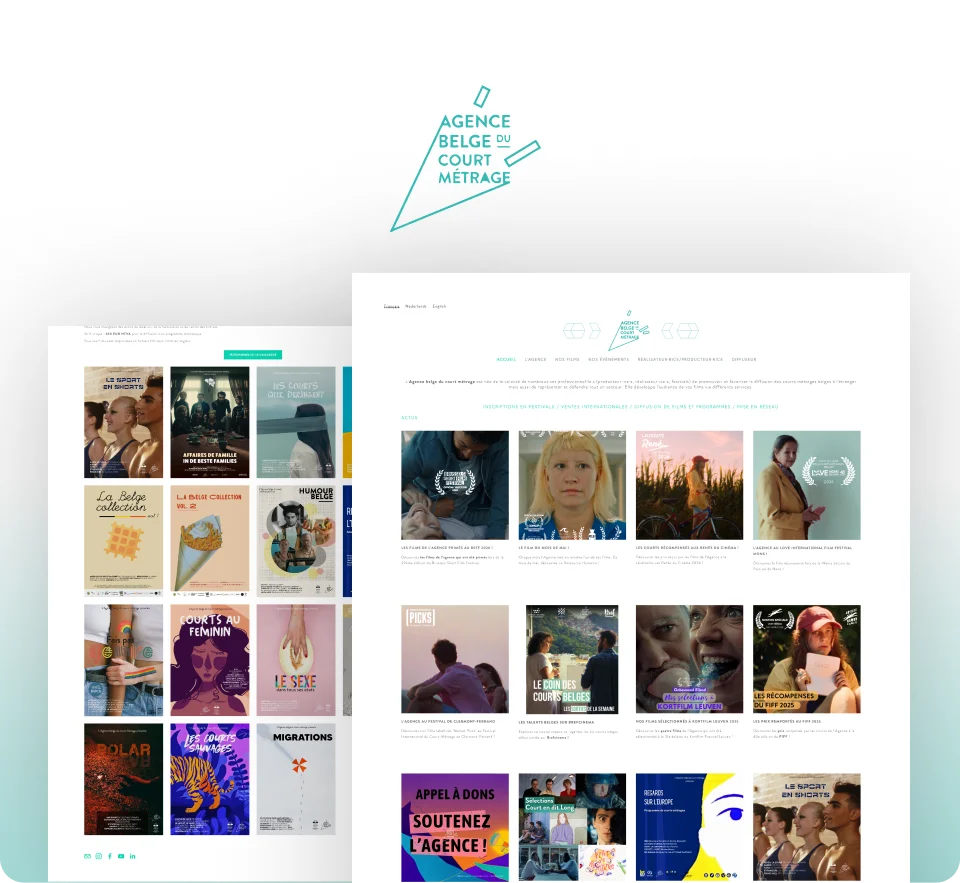
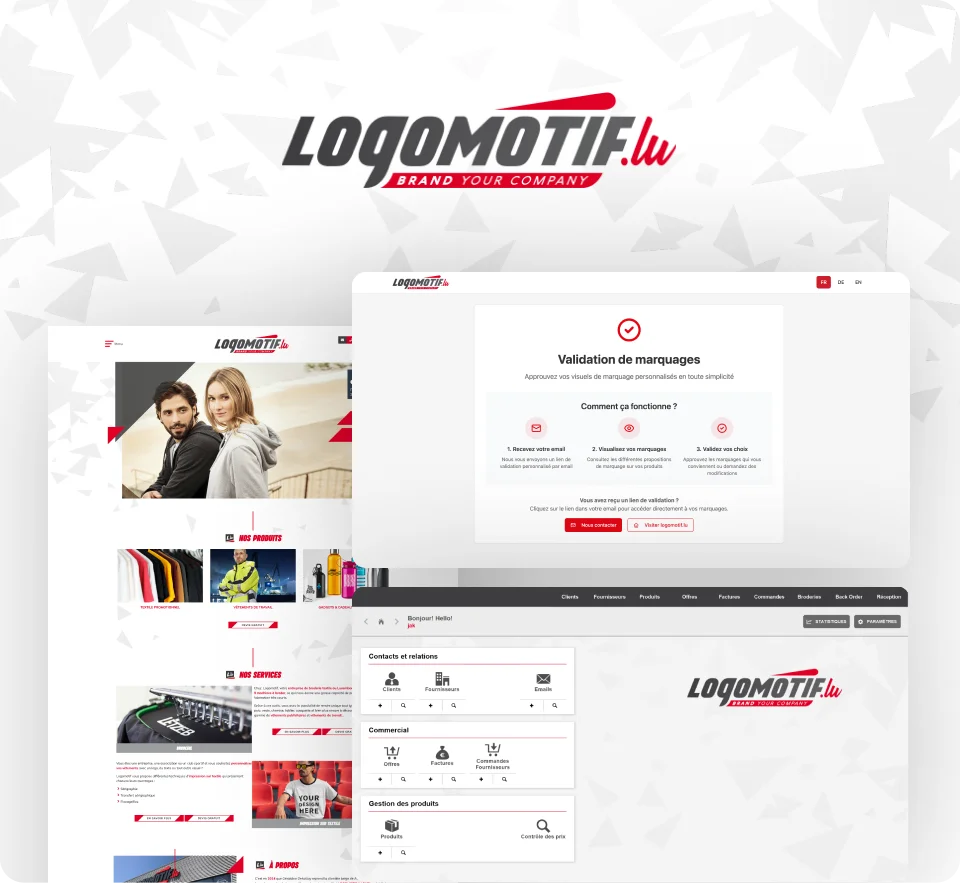
Business tools, SaaS platforms and applications with built in AI, delivered to Belgian SMEs and organizations, then maintained over time.








Frequently asked questions before starting a project
1. How much does custom web application development cost?

On the Belgian market, a focused internal tool generally sits between 5,000 and 15,000 euros, a management tool covering several processes between 15,000 and 50,000 euros, and a platform with client accounts above 40,000 euros.
What moves the figure, in order of impact: functional scope, integrations with existing tools, data migration, and the number of user roles. We always price after a scoping phase, never before.
What moves the figure, in order of impact: functional scope, integrations with existing tools, data migration, and the number of user roles. We always price after a scoping phase, never before.
2. How do I know whether I need custom or existing software?
It depends on the process:
- A standard need such as accounting or payroll: an existing certified solution is almost always enough.
- A process that sets you apart from competitors: custom is justified.
- No satisfactory tool found on the market: custom is justified too.
We say so plainly at the scoping stage, including when the answer is not to build.
3. How long before I have something usable?
A focused internal tool ships in a few weeks. A complete management tool takes several months.
In every case we deliver in testable stages rather than all at once, so you can correct a direction while it is still cheap.
In every case we deliver in testable stages rather than all at once, so you can correct a direction while it is still cheap.
4. What is the validation sprint and why offer it?
Fourteen days at a fixed price of 8,000 euros, any overrun absorbed by the agency. We test the concept with 8 to 12 real users, then deliver a documented recommendation: Go, Pivot or Kill.
The main cause of software project failure is not technical, it is the absence of real need. Checking that before committing to full development changes the level of risk taken.
The main cause of software project failure is not technical, it is the absence of real need. Checking that before committing to full development changes the level of risk taken.
5. Can you connect the application to our current tools?
Yes, this is the case in most of our projects: CRM, ERP, accounting software, third party APIs.
Integration weighs on the budget, so it is better announced at scoping than discovered along the way.
Integration weighs on the budget, so it is better announced at scoping than discovered along the way.
6. What happens to our existing data?
Migrating it is part of the project and is priced.
We recover what is usable, flag what needs cleaning, and plan a period where the old and new systems run side by side when the business cannot stop.
We recover what is usable, flag what needs cleaning, and plan a period where the old and new systems run side by side when the business cannot stop.
7. Who owns the code at the end of the project?
You do. Source code and access are handed over at the end of the engagement.
This is worth checking systematically in any quote, whatever the provider: an unusually low figure is often made up there, or on maintenance.
This is worth checking systematically in any quote, whatever the provider: an unusually low figure is often made up there, or on maintenance.
8. What happens after go live?
The application needs hosting and corrective and evolutive maintenance, two items we price at quote stage rather than letting them appear after delivery.
The team that built the application is the team that maintains it, which avoids a code handover to someone who does not know it.
The team that built the application is the team that maintains it, which avoids a code handover to someone who does not know it.
9. How do you handle security?
A custom application often handles sensitive data, sometimes personal data under GDPR.
We follow OWASP guidelines and budget security updates from the design phase. A quote with neither audit nor updates exposes the company to a far higher cost in the event of an incident.
We follow OWASP guidelines and budget security updates from the design phase. A quote with neither audit nor updates exposes the company to a far higher cost in the event of an incident.
10. Do you work with startups the same way as with SMEs?
Yes, but not in the same way. An SME wants to digitalize a process that already exists and costs it time. A startup wants to validate a product that does not exist yet.
The first starts with scoping, the second almost always with the validation sprint.
The first starts with scoping, the second almost always with the validation sprint.
11. How do we start?
With a conversation where you describe the process that is causing you trouble today.
We tell you what is feasible, in what order of magnitude, and whether the validation sprint fits your project. That conversation is free and without obligation.
We tell you what is feasible, in what order of magnitude, and whether the validation sprint fits your project. That conversation is free and without obligation.
Let us describe your project before pricing it
A process that is costing you time?
Tell us how you work today. We will tell you what an application could change, what it would cost, and whether it is worth it.

Siège social : Boulevard Industriel 61, 1070 Anderlecht
© Copyright JAK Solutions • Powered by JAK Solutions

